

Handmade vs Machine-Made Temples: Which Is Worth Your Investment?

In today’s international of mass production and factory automation, handcrafted items have emerge as increasingly more uncommon and treasured. When it involves sacred objects like domestic temples (pooja mandirs), the difference among home made and gadget-made portions will become no longer only a rely of aesthetics, but of spiritual significance, cultural authenticity, and lengthy-time period fee.
For the ones thinking about a teak wooden temple for their domestic, know-how the profound differences among hand made and mass-produced options can help manual a choice so that it will impact your spiritual exercise for generations to return.
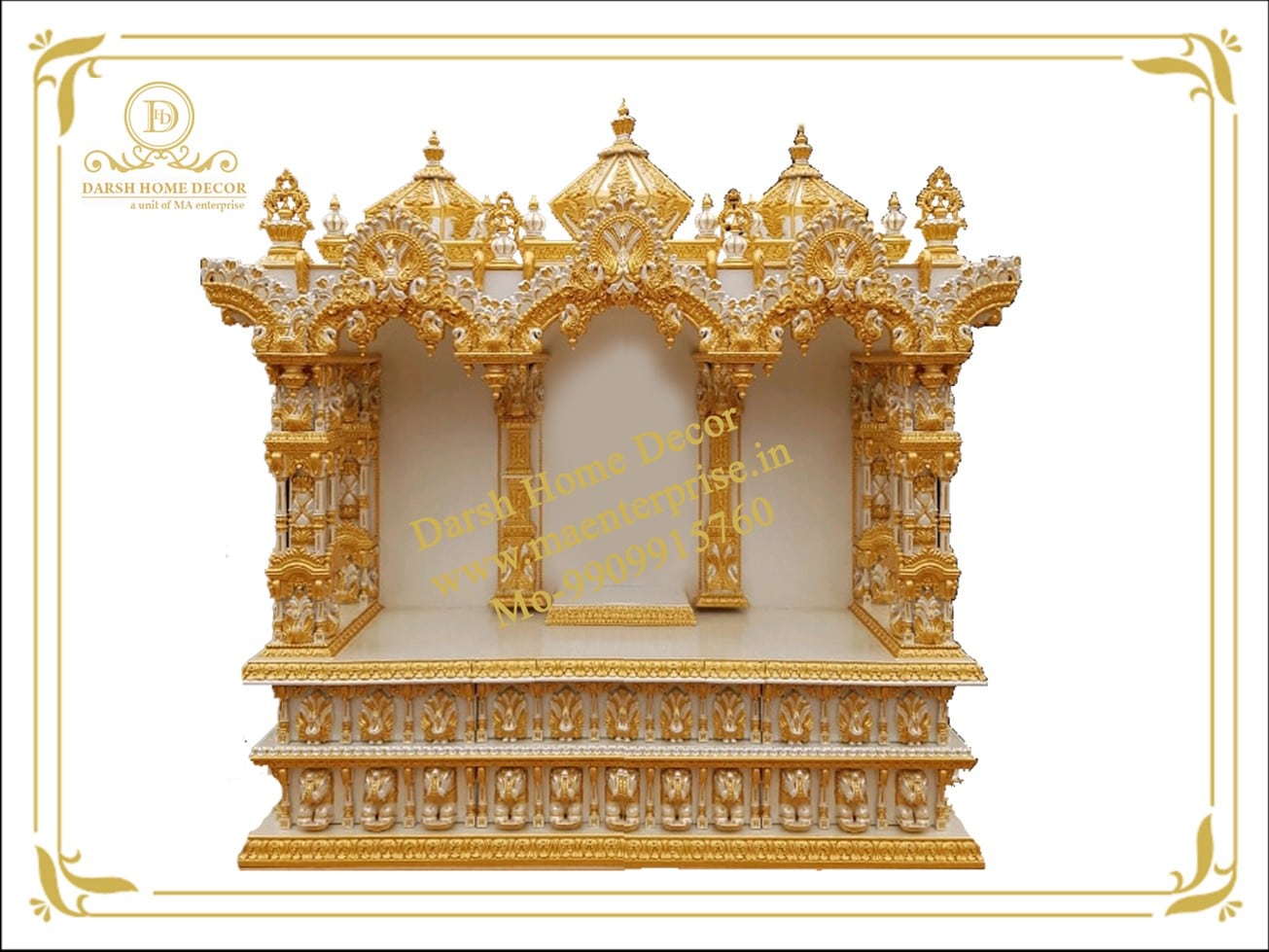
The Artisan’s Touch: What Makes Handcrafted Temples Special
Handcrafted teak temples constitute the continuation of a creative and spiritual way of life that spans hundreds of years. The introduction of these sacred portions involves a long way more than simply technical ability.
The Sacred Geometry of Hand Carving
In the conventional approach to temple crafting, grasp artisans observe precise sacred geometry standards that have been exceeded down through generations:
- Proportion and Balance: Each element is cautiously sized in keeping with historical mathematical ratios observed in sacred texts
- Symbolic Precision: Every curve and attitude carries precise that means in Hindu iconography
- Energy Alignment: Traditional hand measurements ensure right energy float within the sacred shape
Prakash Joshi, a 7th-technology temple artisan from Gujarat, explains: “When I create a mandir with the aid of hand, I’m no longer just reducing wood—I’m channeling a way of life that connects to the divine. My grandfather taught me that each chisel stroke must be made with devotional reason, because the mandir itself will become a vessel for divine power.”
The Human Element in Creation
Beyond technical specs, handcrafted temples incorporate some thing machines absolutely cannot mirror:
- Devotional Intent: Artisans frequently paintings with mantras and prayers, infusing spiritual energy into their creations
- Subtle Variations: The slight imperfections and specific man or woman marks of hand carving create living, respiration artwork
- Intuitive Adjustments: Master craftspeople make intuitive adjustments based totally on the timber’s natural grain and electricity
“The diffused versions in handwork are not flaws—they’re signatures of human connection,” notes Dr. Meenakshi Jain, creator of “Traditional Arts in Modern India.” “Each handcrafted temple consists of the electricity of the artisan who created it, establishing a dwelling lineage between maker and worshipper.”
The Machine Approach: Understanding Factory Production
Machine-made temples have grow to be more and more not unusual within the marketplace, in the main due to their lower price and quicker manufacturing instances. Understanding how they’re made allows clarify what you are clearly purchasing.
Modern Manufacturing Methods
Today’s machine-produced temples commonly contain:
- CNC Routing: Computer-managed reducing machines that comply with digital templates
- Laser Cutting: Precise but standardized designs cut consistent with programmed patterns
- Assembly Line Construction: Different people completing repetitive, specialised duties without overseeing the entire introduction
- Template-Based Designs: Limited versions based totally on standardized, pre-accepted styles
While these strategies create consistent products, they basically trade the nature of the object being created.
The Trade-offs of Mechanization
The shift to mechanized manufacturing comes with tremendous compromises:
- Spiritual Disconnection: The absence of continuous human intention in the course of the creation manner
- Material Compromises: Often the use of composite woods or decrease-grade teak to accommodate gadget necessities
- Design Limitations: Restricted to patterns that machines can execute, losing the subtlety of hand carving
- Cultural Discontinuity: Breaking the conventional grasp-apprentice understanding transmission
Quality Comparisons: The Tangible Differences
Beyond the philosophical and religious considerations, handcrafted and system-made temples vary in several practical factors that have an effect on lengthy-time period delight and fee.
Material Selection and Usage
Handcrafted Approach:
- Individual timber pieces selected for precise temple sections based totally on grain and individual
- Natural versions within the wooden included meaningfully into the layout
- Heartwood of teak prioritized for key structural and carved factors
Machine Approach:
- Standardized fabric selection prioritizing uniformity over man or woman
- Natural versions in wooden frequently taken into consideration defects to be removed
- Materials selected for system compatibility rather than optimal spiritual houses
Joinery and Construction Techniques
Handcrafted Techniques:
- Traditional joinery techniques like mortise and tenon, dovetail, and lap joints
- Hand-outfitted connections that adapt to the natural houses of each piece
- Joinery selection primarily based on each structural integrity and traditional that means
Machine Construction:
- Simplified joinery designed for system execution and quick assembly
- Heavy reliance on glues and mechanical fasteners
- Standardized connections that do not account for wood’s natural traits
Woodworking expert James Richardson of the Fine Woodworking Institute explains: “The distinction between hand-reduce and gadget-reduce joinery isn’t always simply aesthetic—it’s structural. Hand-cut joints can adapt to the timber’s natural motion through the years, even as machine joints regularly combat against it, leading to eventual structural problems.”
Carving Depth and Dimensionality
Handcrafted Carving:
- Multiple tiers of intensity growing rich, three-dimensional relief
- Undercutting techniques that create shadow and visible movement
- Variable intensity responding to the layout’s spiritual importance
Machine Carving:
- Typically confined to two.5D consequences (varying height but restricted undercutting)
- Uniform depth all through comparable factors
- Mechanical boundaries in growing complex layered designs
“A traditionally carved temple has at least seven wonderful layers of depth in its comfort work,” notes grasp carver Rajesh Sharma. “This creates now not simply visual richness, but lets in the play of light and shadow that brings the sacred figures to lifestyles as the day progresses—something gadget carving sincerely can not obtain.”
The Investment Perspective: Long-Term Value Considerations
For the discerning consumer, a temple is not just a purchase but an funding—financially, culturally, and spiritually. Comparing the lengthy-time period value propositions of each alternatives famous enormous variations.
Financial Investment Analysis
While handcrafted temples normally cost 3-5 times more than their system-made counterparts to begin with, their price proposition changes dramatically over the years:
Handcrafted Temple Value Factors:
- Appreciates in fee as traditional craftsmanship will become rarer
- Represents an artisanal investment just like great art
- Creates a circle of relatives heirloom with increasing well worth over generations
- Can be professionally restored if ever damaged
Machine-Made Temple Value Factors:
- Typically depreciates like heavily produced fixtures
- Limited distinctiveness reduces collector or heirloom price
- Often designed with planned obsolescence in thoughts
- Frequently hard to restore if damaged
According to a 2024 document from the Heritage Craft Association, hand made religious gadgets have appreciated at an average of four-7% annually over the last decade, considerably outperforming heavily produced options.
Cultural Heritage Investment
Beyond monetary considerations, temple purchases represent an funding in cultural preservation:
- Supporting Traditional Craftsmanship: Handcrafted purchases directly help the livelihood of artisans and the preservation of endangered know-how structures
- Educational Value: Handcrafted portions provide tangible connections to standard techniques that may be shared with destiny generations
- Community Impact: Supporting grasp craftspeople often advantages entire conventional artisan groups
Identifying Quality: How to Recognize Authentic Handcraftsmanship
In modern market, many gadget-made temples are deceptively marketed as “hand-finished” or “artisanal.” Knowing how to perceive virtually hand made paintings facilitates make sure you’re making an informed selection.
Visual Indicators of Hand Craftsmanship
Look for these signs of real handwork:
- Subtle Asymmetry: Perfect symmetry regularly suggests device production, at the same time as diffused versions advise human arms
- Tool Marks: Genuine handcraft frequently retains subtle, intentional tool markings from chisels and conventional tools
- Depth Variation: Different tiers of relief intensity and undercutting during the carving
- Grain Alignment: Thoughtful orientation of timber grain to reinforce carved information and joinery
- Joint Complexity: Complex, precisely equipped conventional joinery in preference to simplified connections
Questions to Ask Before Purchasing
When comparing a temple, do not forget asking:
- Who made this piece? (Authentic handcrafted paintings can normally be traced to particular artisans or workshops)
- What conventional techniques have been used? (Knowledgeable dealers can provide an explanation for specific hand techniques)
- Can you display documentation of the crafting technique? (Photos of the piece for the duration of advent help verify handcraftsmanship)
- What particular woods had been used in every section? (Detailed know-how of substances indicates real craftsmanship)
- How turned into the joinery created? (Traditional hand-reduce joinery shows authentic handcraftsmanship)
The Middle Path: Understanding “Hybrid” Creation
Some temples in modern-day marketplace represent a center ground, combining factors of each traditional and present day production tactics.
Hybrid Manufacturing Approaches
These generally involve:
- Machine cutting of primary additives mixed with hand finishing
- Hand assembly of machine-cut components
- Machine-assisted difficult reducing observed by way of distinctive hand carving
While hybrid methods can offer a compromise on fee and production time, they still contain sizable alternate-offs in comparison to fully hand made pieces. Understanding exactly which elements are hand made as opposed to system-made allows check the actual value of hybrid portions.
The Environmental and Ethical Dimensions
The preference between hand made and gadget-made temples also contains environmental and moral implications really worth considering.
Sustainability Considerations
Handcrafted Approach:
- Typically makes use of timber extra successfully with less waste
- Employs traditional, low-energy equipment and techniques
- Often consists of careful choice of sustainably harvested substances
Machine Approach:
- Generally better electricity consumption at some point of manufacturing
- Often creates more timber waste in the course of processing
- Frequently is based on composite substances with shorter lifespans
Ethical Supply Chain Factors
Handcrafted Production:
- Supports conventional artisan groups and information structures
- Typically presents truthful reimbursement reflecting talent stage
- Preserves cultural historical past and conventional livelihoods
Mass Production:
- Often is predicated on low-wage manufacturing facility environments
- Frequently disconnects people from the cultural significance of what they’re growing
- May contain supply chains with less transparency
Dr. Amita Baviskar, environmental sociologist at the Institute of Economic Growth, notes: “The revival of interest in handcrafted non secular items represents no longer just a spiritual preference but an environmental one. Traditional craft manufacturing commonly has a miles smaller carbon footprint than industrial manufacturing, at the same time as helping sustainable livelihoods in communities with multi-generational craft know-how.”
Finding the Right Temple for Your Home and Practice
Ultimately, the selection between hand made and system-made temples is deeply personal, reflecting your values, budget, and spiritual intentions.
When a Handcrafted Temple May Be Right for You
Consider making an investment in a handcrafted temple if:
- You fee traditional techniques and cultural authenticity
- You’re developing a space intended for use throughout generations
- The non secular lineage and energetic connection to artisans subjects to you
- You view your temple as a vast investment in each spiritual and financial terms
- Supporting conventional craft groups aligns together with your values
When a Machine-Made Temple Might Be Sufficient
A system-made alternative is probably appropriate if:
- You’re operating within substantial price range constraints
- You want a brief solution whilst saving for a handcrafted piece
- You’re in a transient living scenario where making an investment in an heirloom piece isn’t practical
- The visual look is your number one consideration rather than conventional craftsmanship
FAQs About Handcrafted vs. Machine-Made Temples
How a whole lot greater steeply-priced are hand made temples compared to machine-made ones?
Typically, absolutely handcrafted teak temples value 3-5 instances more than gadget-made versions of similar size. However, this hole narrows whilst thinking about lengthy-time period value, as handcrafted pieces often appreciate whilst device-made ones depreciate.
How long does it take to create a handcrafted temple compared to a system-made one?
A completely hand made temple usually calls for 2-4 months of committed craftsmanship, depending on length and complexity. Machine-made variations may be produced in days or weeks. This time investment is a part of what creates the precise strength and price of handcrafted portions.
Can I fee a partially hand made temple to manipulate costs?
Yes, many artisans offer options wherein structurally easy elements are gadget-cut even as specified carvings and sacred elements are hand made. This technique can offer a meaningful compromise among cost and authenticity.
How do I verify if a temple bought as “handcrafted” is real?
Request specific pics of the creation process, ask about particular artisans involved, and look for the visual indicators of hand craftsmanship mentioned earlier. Reputable dealers ought to be obvious approximately exactly which factors are hand made versus system-made.
Do handcrafted temples require extraordinary care than machine-made ones?
Yes, commonly hand made temples use traditional completing strategies that can require one of a kind preservation than the synthetic finishes not unusual on device-made pieces. However, proper care of a hand made temple often effects in appreciably longer lifespan and higher getting old characteristics.
Conclusion: The Value Beyond Price
When evaluating hand made as opposed to device-made temples, the difference extends far beyond simple economics. A hand made temple represents the protection of historical information, the aid of traditional artisan groups, and an instantaneous connection to hundreds of years of non secular and creative culture.
The temple in your home isn’t simply decorative furnishings—it is a sacred space that influences the spiritual electricity of your environment and practice. The aim, talent, and devotion that is going into developing this space matters deeply, both culturally and spiritually.
As machine production increasingly dominates our global, the aware choice to put money into traditional handcraft will become not only a buy selection however a announcement of values—a popularity that some matters can’t be rushed or mechanized without dropping their critical individual.
Whether you choose a totally hand made heirloom piece, a hybrid technique, or a system-made temple that fits your cutting-edge situations, expertise the profound variations among these options allows you to make a choice aligned along with your private values and spiritual intentions.
Every joint, carving, and polish on our temples is executed by way of hand. Our master artisans, with decades of education in traditional techniques, create every temple as a unique non secular vessel, combining historic sacred geometry with devotional intention. Explore our series of hand made teak temples, created with methods unchanged for generations, to bring true non secular craftsmanship into your property. Contact Us today to get a teakwood temple for your homes.