

Why Teak Wood Is the Preferred Material for Home Temples: The Spiritual Connection

Across generations and geographies, one thing remains constant — the reverence for sacred space within the home. A pooja room or mandir is more than a decor element; it’s a sanctuary that holds faith, focus, and family energy.
Among the many materials chosen to build such sacred corners, teak wood has always stood apart. Known for its durability and grace, teak carries a spiritual significance that goes far beyond its surface beauty.
This article explores the spiritual meaning of teak wood, its traditional symbolism, and why generations of devotees and artisans consider it the holy wood of home temples.
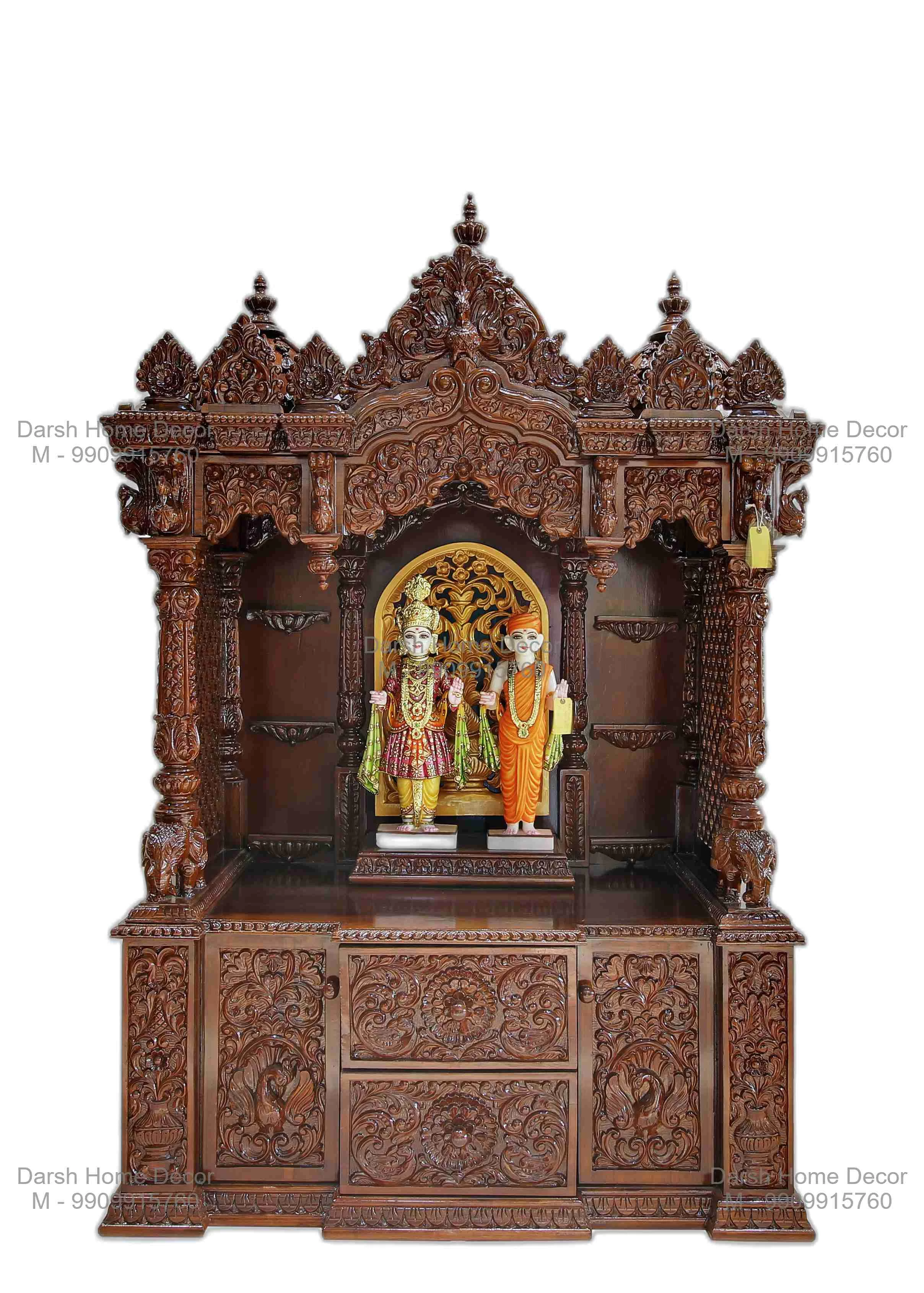
The Sacred Legacy of Teak Wood
In Indian tradition, certain woods are believed to absorb and reflect divine energy. Teak wood (Tectona grandis) has been used in temples, ashrams, and royal architecture for centuries — a material whose purity and endurance honor the divine.
Spiritual Meaning of Teak Wood
- Purity and Protection: Teak’s natural oils keep it free from decay, symbolizing the strength of truth and integrity.
- Longevity: A metaphor for faith that stands against time and adversity.
- Warmth and Calm: Its golden-brown glow evokes sunlight and spiritual radiance.
- Balance: Associated with the earth element (Prithvi tattva), it brings grounding and stability to any space of prayer.
Through centuries of ritual and craftsmanship, teak became not just a construction material but a conduit of sacred energy — a living symbol of devotion that deepens with age.
Why Teak Is the Ideal Wood for Home Temples
Choosing wood for a mandir isn’t merely about aesthetics; it’s about resonance — how the material interacts with your energy, prayer, and surroundings.
Teak wood fits naturally into the rhythm of spiritual rituals due to its strength, subtle fragrance, and organic aura.
| Attribute | Spiritual Interpretation | Practical Advantage |
|---|---|---|
| Durability | Resilience, faith that lasts | Long-lasting structure |
| Natural Oils | Purity, self-protection | Repels termites and moisture |
| Natural Grain | Divine artistry | Aesthetic depth and uniqueness |
| Color | Warmth, positivity | Matches most home interiors |
| Sustainable Growth | Balance with nature | Ethically sourced and eco-friendly |
When you bring home a teak wood pooja mandir, you invite not just craftsmanship — but harmony, grace, and continuity of faith.
Teak and Devotional Energy
In Indian temples, teak wood has historically been favored for deity sanctums, temple doors, and pillars. The reason goes beyond its beauty: teak breathes confidence, strength, and sacred endurance.
- In Hindu traditions, it is believed to attract sattvic energy — calm, clear, and uplifting in nature.
- In Buddhist monasteries across Myanmar and Thailand, teak was revered as “mind wood,” calming the meditator’s energy through its natural aroma and texture.
- In Indonesia and Sri Lanka, carving teak figures or altars is considered an act of prayer in itself — meditation through creation.
Thus, the spiritual meaning of teak wood extends into every culture that seeks serenity through craftsmanship.
The Holy Wood: Teak’s Significance Across Traditions
| Region | Belief or Use | Spiritual Value |
|---|---|---|
| India | Temple architecture, sacred furniture | Symbol of purity, endurance, prosperity |
| Thailand and Myanmar | Used in monastery halls and meditation spaces | Represents peace and mindfulness |
| Indonesia | Believed to harmonize spirit and surroundings | Embodies natural balance |
| Europe and USA | Used for altars and prayer spaces | Symbol of timeless grace and stability |
The reverence for teak stems not only from utility but from a deep intuitive connection between nature and spirituality.
Linking Vastu Wisdom with Teak Temples
While teak’s inner energy adds sanctity, correct Vastu placement ensures your home temple radiates harmony. Aligning both material and direction creates an environment of stillness and positivity.
According to Vastu experts, temples made from sacred, stable woods like teak embody earth’s grounding energy. When positioned toward the northeast (Ishan Kon) corner — the direction of wisdom and divinity — they amplify positivity throughout the home.
For detailed insights on layout and directions, see
6 Ways Vastu Can Help You Create the Perfect Pooja Room or Temple in Your Home by Architectural Digest India.
This guide offers valuable, expert-backed advice on how spiritual materials like teak work best when paired with Vastu principles.
Sustainability and Sanctity
At Teak Crafts, devotion begins with intention. Every log is ethically sourced ensuring forest conservation and artisan livelihood protection.
By choosing a teak wood mandir, you support eco‑friendly woodworking — turning spirituality into conscious sustainability.
Teak Crafts: Crafting Sacred Wood into Living Art
Each teak temple we craft is a meeting of heritage and heart. Our artisans carve with care, instinctively following the natural grain of the wood, letting it “speak” its sacred rhythm.
Every mandir thus becomes:
- A heirloom of devotion — built to last generations.
- A piece of design harmony — balancing texture, space, and soul.
- A symbol of inner calm — grounding modern homes in spiritual authenticity.
To explore handcrafted teak mandir designs, visit Teak Crafts — where sustainability meets spirituality.
Conclusion: The Enduring Spirit of Teak
In a world defined by change, teak remains a constant of quiet strength and spiritual symbolism. From its deep natural resilience to its ancient roots in temple design, teak embodies faith that matures beautifully with time.
More than a building material, it is holy wood — bridging the worlds of craft and consciousness, devotion and design.
Bring home peace. Bring home teak.